
Selected work

Software built around how your business actually works.

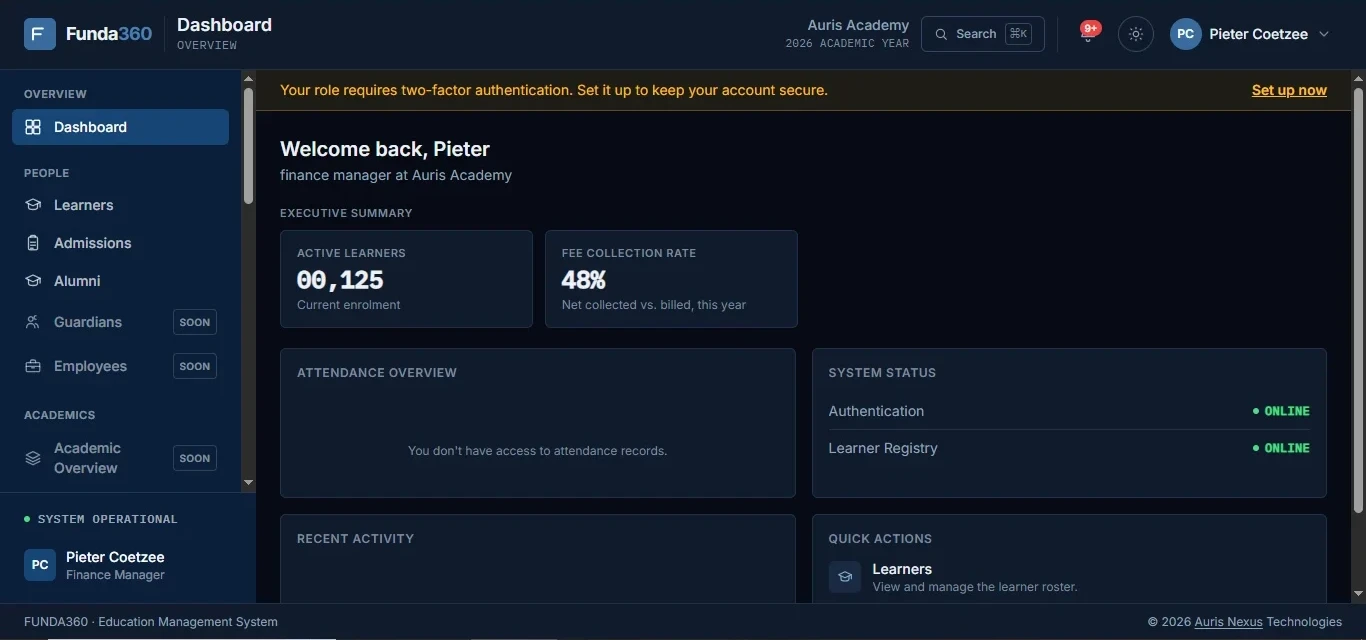
Auris Nexus designs and builds custom software, operational platforms, business systems and websites for organisations that need technology to solve a real operational problem. Below are five projects we've built — a school management platform, an HR and leave system, a logistics operations platform and a corporate website. Each case study covers the problem, what we built, the technology and what it enables. We only describe features that genuinely exist.

Selected Auris Nexus software case studies including Funda360
  1. 02 CIT Leave Management System HR administrator dashboard built by Auris Nexus

    HR / Workforce management software

    CIT Leave Management System

    A structured leave and HR workflow — employee request, manager review, HR administration — replacing email and spreadsheets.

    View case study
  2. 03 LOGIOS OS logistics operations platform workspace dashboard built by Auris Nexus

    Logistics operations platform · Custom software

    LOGIOS OS

    A multi-tenant operations platform for logistics — scheduling, jobs, incidents, fleet, drivers, customers and compliance in one workspace.

    View case study
  3. 04 Sebetsa workforce and operations platform dashboard by Auris Nexus

    Workforce & operations platform · Enterprise software

    Sebetsa

    An enterprise operations platform bringing workforce, site operations, attendance, scheduling, tasks, compliance, assets, inventory and reporting into one role-aware workspace.

    View case study
  4. 05 Pro Energy Solutions corporate website designed and built by Auris Nexus

    Web development · Digital presence

    Pro Energy Solutions

    A fast, responsive corporate website for a Johannesburg energy business, built on a technical-SEO foundation with the performance work measured, not assumed.

    View case study
Why this work matters

We build software around the business — not the other way around.

None of these projects started with a screen design. They started with a process that wasn't working. That's the part that makes software worth building.

Understand the operational problem

We start with how the work happens today — the spreadsheets, the approvals, the hand-offs and the gaps.

Map the workflow, then design the system

Roles, states and permissions are worked out before a line of UI — so the system matches the org, not a template.

Build it securely

Authentication, role-based access and row-level security enforced in the data layer — not just hidden in the interface.

Connect the data

One record, one source of truth — dashboards and reporting that were never practical across separate files.

Make it usable

Interfaces people can actually work in every day, on a phone or a desktop, without training manuals.

Engineer a foundation that scales

Multi-tenant, modular architecture so the next school, client or module doesn't mean rebuilding the system.

04
Enterprise operations platform

Sebetsa — workforce & operations platform

Built & Tested Enterprise Operations Custom software

A role-aware, multi-tenant platform designed to give service organisations one operational workspace for people, sites, work, compliance, assets and stock.
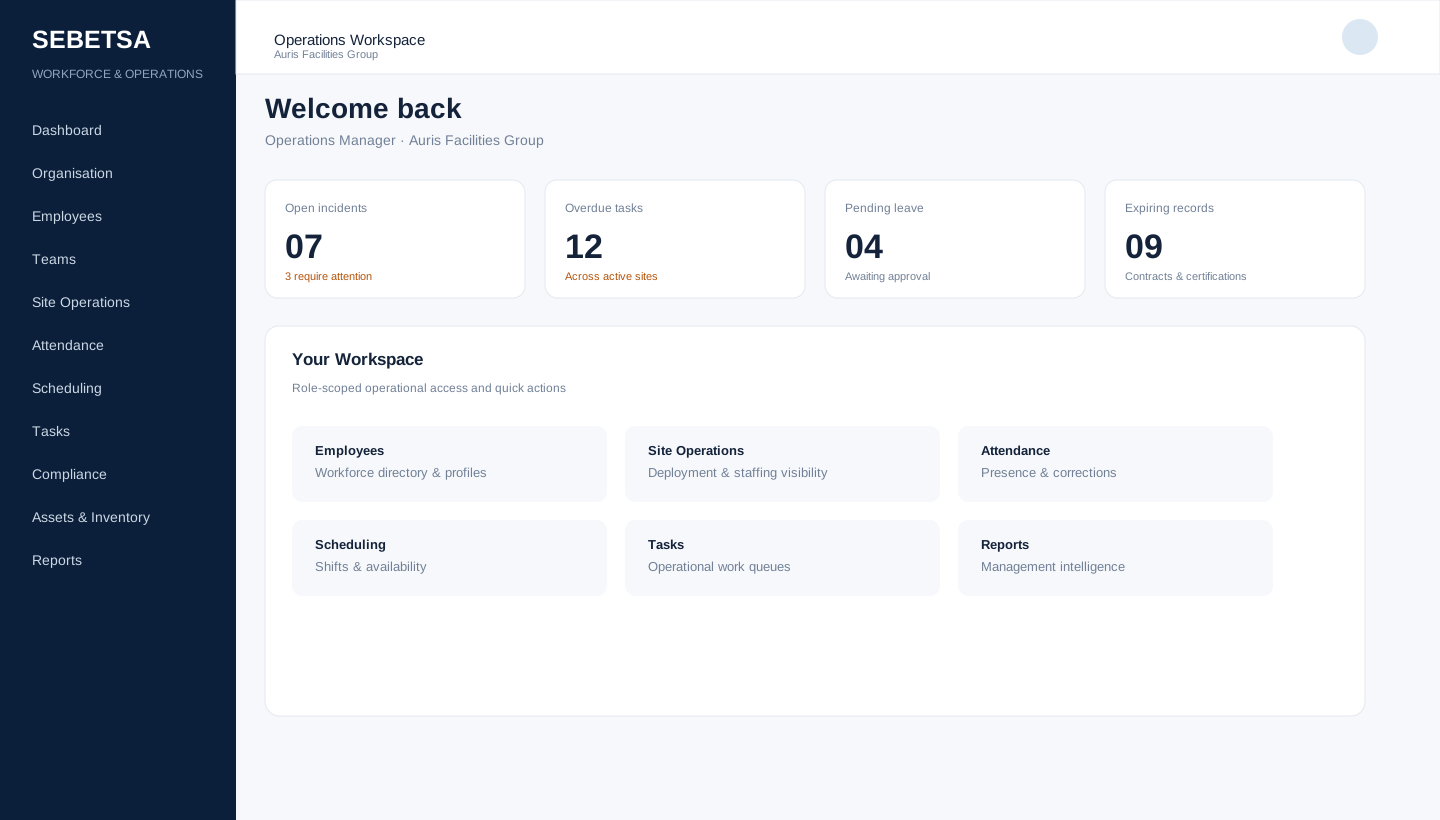
Sebetsa workforce and operations platform dashboard
Operations workspace showing role-scoped navigation, operational exceptions and quick access to the functions relevant to the signed-in role.

The challenge

Service organisations need to coordinate people, sites, shifts, tasks, incidents, compliance and operational stock without forcing managers to work across disconnected spreadsheets and systems.

The approach

Sebetsa is structured around the organisation's operational hierarchy — organisation, regions, clients, sites, contracts and workforce — with permissions and data access resolved by role.

The solution

A modular web platform covering workforce administration, site operations, attendance, scheduling, leave, tasks, documents, incidents, compliance, assets, inventory, procurement, development and management reporting.
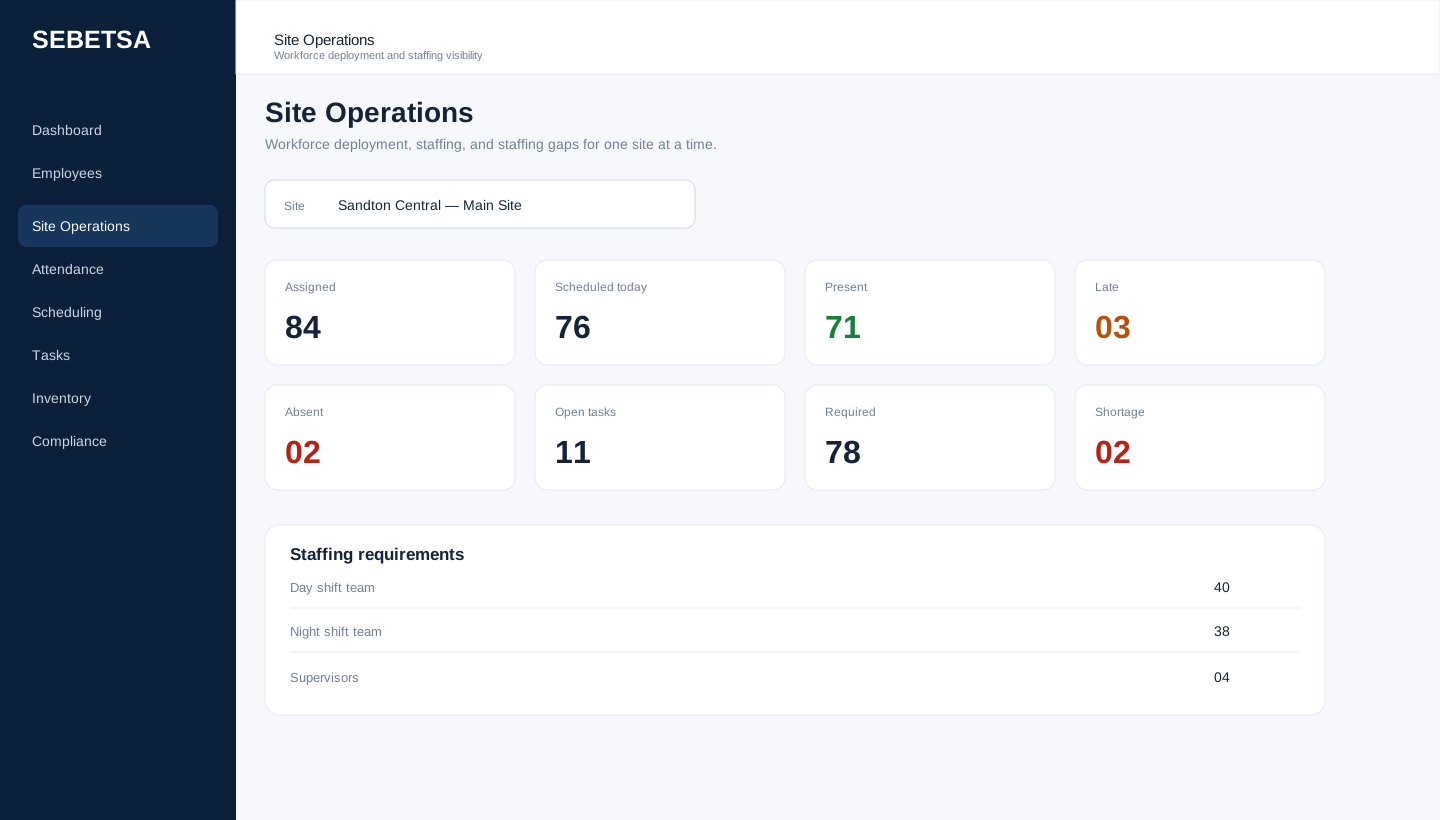
Sebetsa site operations and staffing dashboard
Site-level workforce visibility: assigned staff, today's schedule, attendance, open work and staffing requirements.
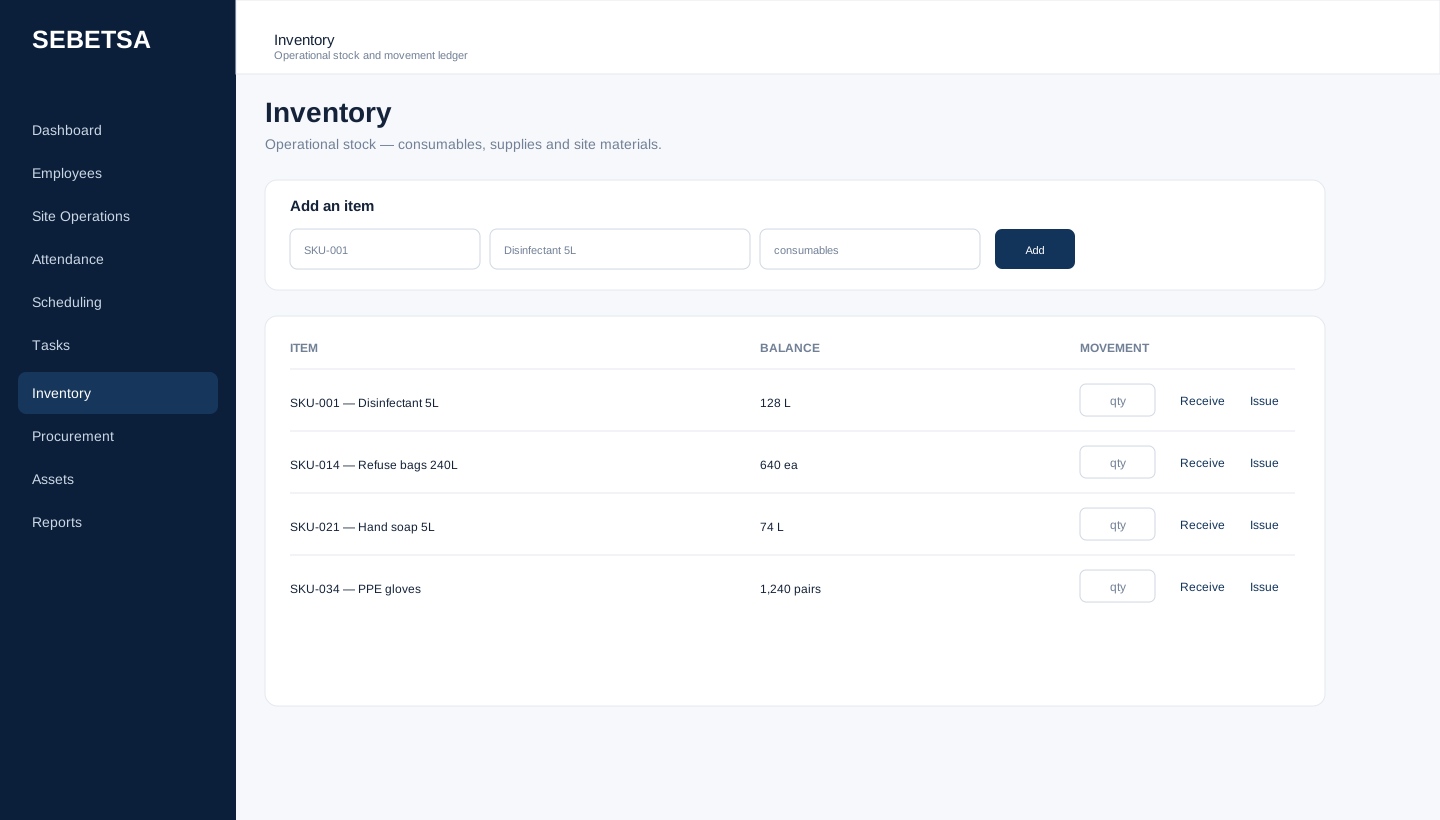
Sebetsa operational inventory and stock movement screen
Operational inventory with site balances and controlled receipt and issue movements.

Key capabilities

  • Multi-tenant organisation and operational structure
  • Role-based access across workforce and operational modules
  • Employee, department, position and team management
  • Site operations, workforce deployment and staffing visibility
  • Attendance, scheduling, availability, leave and task workflows
  • Incidents, compliance, assets, inventory and procurement
  • Client, contract and SLA management
  • Workforce development, training, skills and performance workflows
  • Management reporting and operational intelligence

Technical approach

Sebetsa is built as a TypeScript React application with Vite and Tailwind CSS, backed by Supabase/PostgreSQL. Authentication, role permissions and row-level security are enforced through the application and data layer, with modular feature boundaries and automated unit, end-to-end and security regression testing.
React TypeScript Vite Tailwind CSS Supabase PostgreSQL Row-level security Multi-tenant architecture
02
Case study

CIT Leave Management System

Delivered HR technology Workflow automation Custom software

Replacing fragmented leave administration with a structured digital workflow — employee request, manager review, HR administration — for a single organisation.

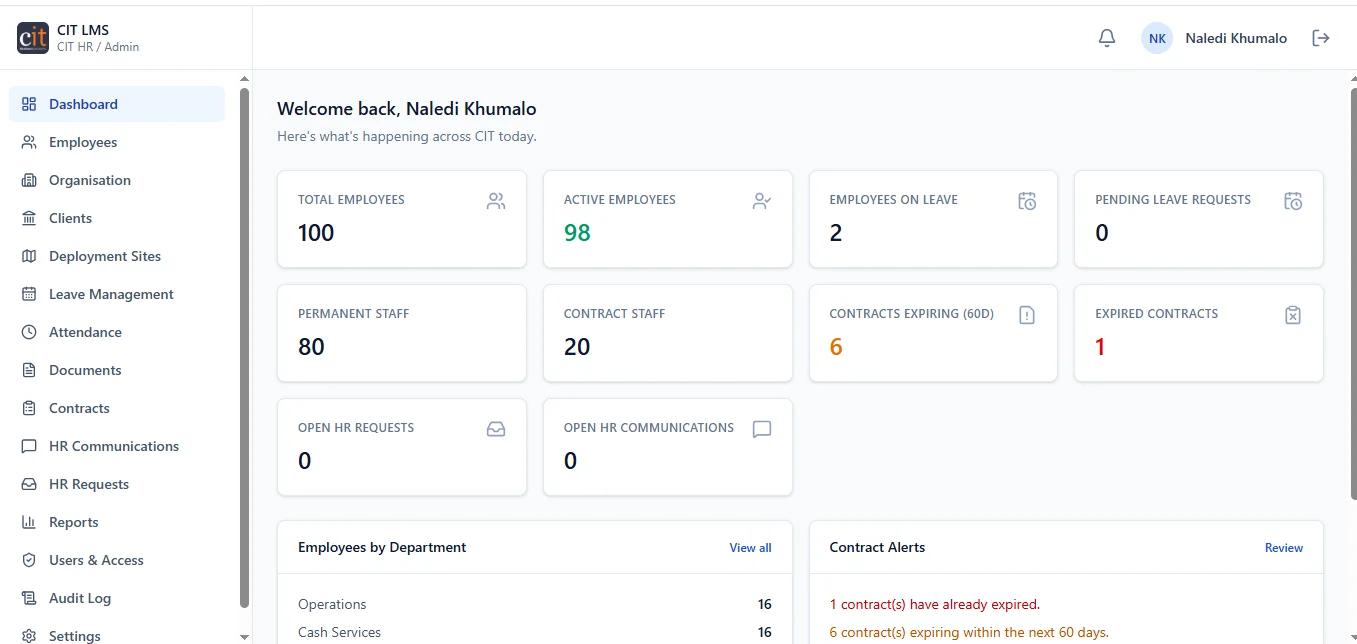
CIT Leave Management System HR administrator dashboard, with headcount, leave and contract-status cards and navigation for employees, leave management, attendance, contracts, deployment sites and reports
The HR administrator dashboard. Headcount, who is on leave, pending leave requests and contract-expiry alerts sit on one screen, with the full HR surface — employees, leave, attendance, contracts, deployment sites, clients, documents, reports and an audit log — in the left navigation.

The challenge

Employee leave and day-to-day HR administration ran on forms, email approvals and spreadsheets. Requests were easy to lose, approval steps were inconsistent, and neither managers nor HR had a reliable view of where things stood.

The approach

Map the organisation's actual leave process, then build a web system around it: a clear path from employee request to manager review to approval or decline, with HR administration and permissions layered on top.

The solution

A web-based leave and HR management system for a single organisation, covering leave requests and approval workflows, employee records, attendance, contract tracking with expiry alerts, deployment sites and clients, HR requests and communications, and reporting — with an HR administrator dashboard over the top.

Key capabilities

  • Leave requests with a defined approval workflow: employee → manager review → approve / decline
  • Role-based access — employee, posting manager and HR administrator views
  • HR administrator dashboard — headcount, employees on leave, pending approvals and contract alerts at a glance
  • Employee records, organisation structure, clients and deployment sites
  • Contract tracking with expiry and expired-contract alerts
  • Attendance, documents and HR reporting in one system
  • HR requests and a tracked HR communication channel
  • Users & access management and an audit log

Technical approach

A single-page application over a PostgreSQL database, with the approval workflow and permissions enforced in the data layer rather than only in the UI. Built for one organisation, with roles that mirror its reporting structure.

React TypeScript Tailwind CSS Supabase PostgreSQL Role-based access

What Auris Nexus did

Discovery of the existing leave process, system and workflow design, and full-stack engineering through to delivery.

What it enables

A single source of employee data, faster and more consistent leave decisions, and visibility for managers and HR that the previous email-and-spreadsheet process could not provide.

Have a process stuck in email and spreadsheets? That's usually where a system like this starts. Request a demo of the CIT system to see how it's structured.

A quick gut check

Is a business process costing you more time than it should?

Fragmented tools, manual approvals, re-keyed data, no clear view of what's happening. If that sounds familiar, it's worth a conversation — no obligation, no jargon.

03
Case study

LOGIOS OS — logistics operations platform

In active development Operations software Logistics Custom software

Bringing logistics operations — scheduling, jobs, incidents, fleet, drivers, customers and compliance — into one controlled, role-aware workspace instead of separate tools and message threads.

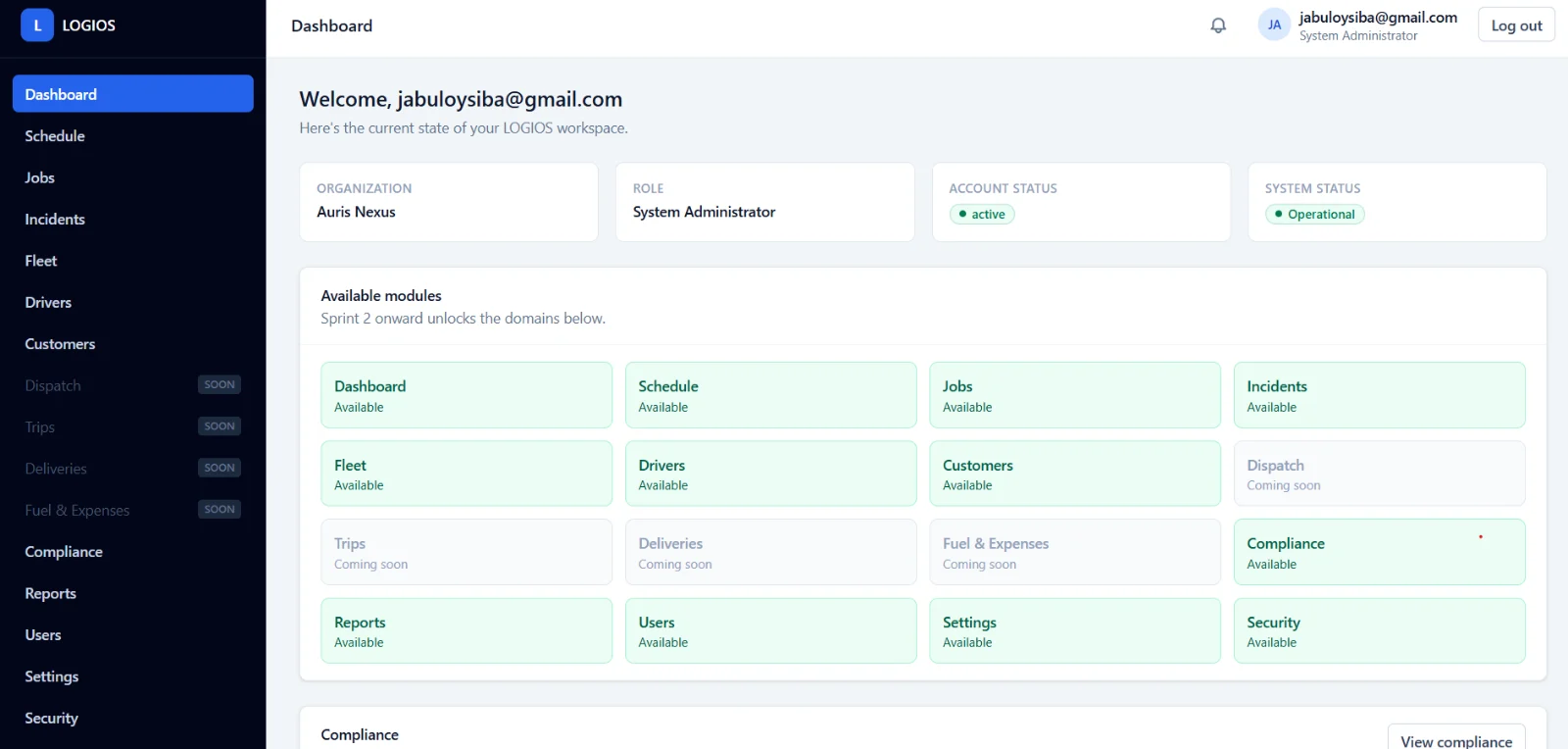
LOGIOS OS workspace dashboard showing organisation, role and system status, with operational modules for schedule, jobs, incidents, fleet, drivers, customers, compliance and reports
The workspace dashboard. Each organisation is its own tenant with its own users and roles — this session is a system administrator. Operational domains are delivered as modules: the core set (schedule, jobs, incidents, fleet, drivers, customers, compliance, reports) is live, with dispatch, trips, deliveries and fuel & expenses on the roadmap.

The challenge

Logistics operators coordinate jobs, vehicles, drivers, customers and incidents across phone calls, spreadsheets and separate apps. Nothing is joined up, accountability is hard to trace, and there's no single operational picture.

The approach

Design a modular operations platform on a multi-tenant foundation: shared identity, roles and audit from day one, with each operational domain built as a module that can be switched on as it's ready.

The solution

A web application where an organisation manages scheduling, jobs, incidents, a fleet register, drivers, customers, compliance and reporting from one workspace, with role-based access and a system-status view. Dispatch, trips, deliveries and fuel & expenses are in development.

Key capabilities

  • Multi-tenant architecture — each operator is an isolated tenant with its own users
  • Role-based access — scoped to the user's role, e.g. system administrator
  • Scheduling and job management
  • Incident logging and tracking
  • Fleet register and driver management
  • Customer records
  • Compliance module and operational reporting
  • Modular design — operational domains enabled as they're delivered

Technical approach

LOGIOS is a single-page application backed by a managed PostgreSQL database. Tenant isolation and per-role access are enforced at the data layer with row-level security, so every query is scoped to the organisation and the user's permissions. The module structure keeps each operational domain independent.

React TypeScript Vite Supabase PostgreSQL Row-level security Multi-tenant SaaS

What Auris Nexus did

Product and platform design, the multi-tenant data model, role and permission design, and full-stack engineering of the workspace and its modules. Development is ongoing.

What it enables

A single operational picture for a logistics business, traceable actions through roles and auditing, and a foundation that takes on new operational domains as modules rather than new systems.

Run an operation on spreadsheets and phone calls? Request a demo of LOGIOS to see how the workspace is structured.

05
Case study

Pro Energy Solutions — corporate website

Completed Web development SEO Business website

Turning a Johannesburg solar and electrical business into a clearer, faster and more credible digital presence — with the performance work measured, not assumed.

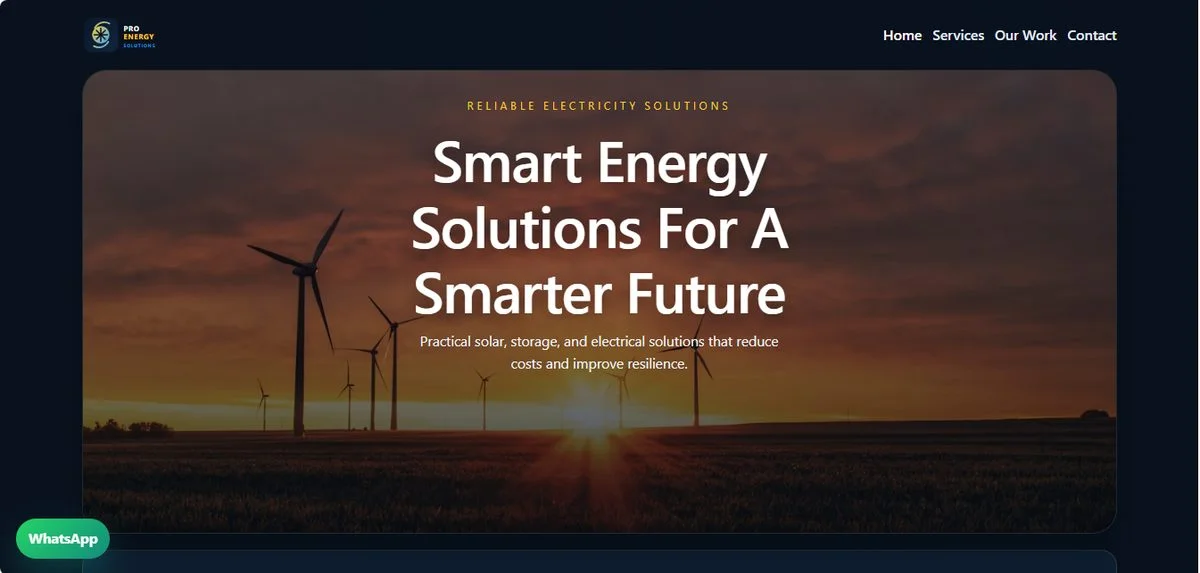
Pro Energy Solutions website homepage with the headline Smart Energy Solutions For A Smarter Future
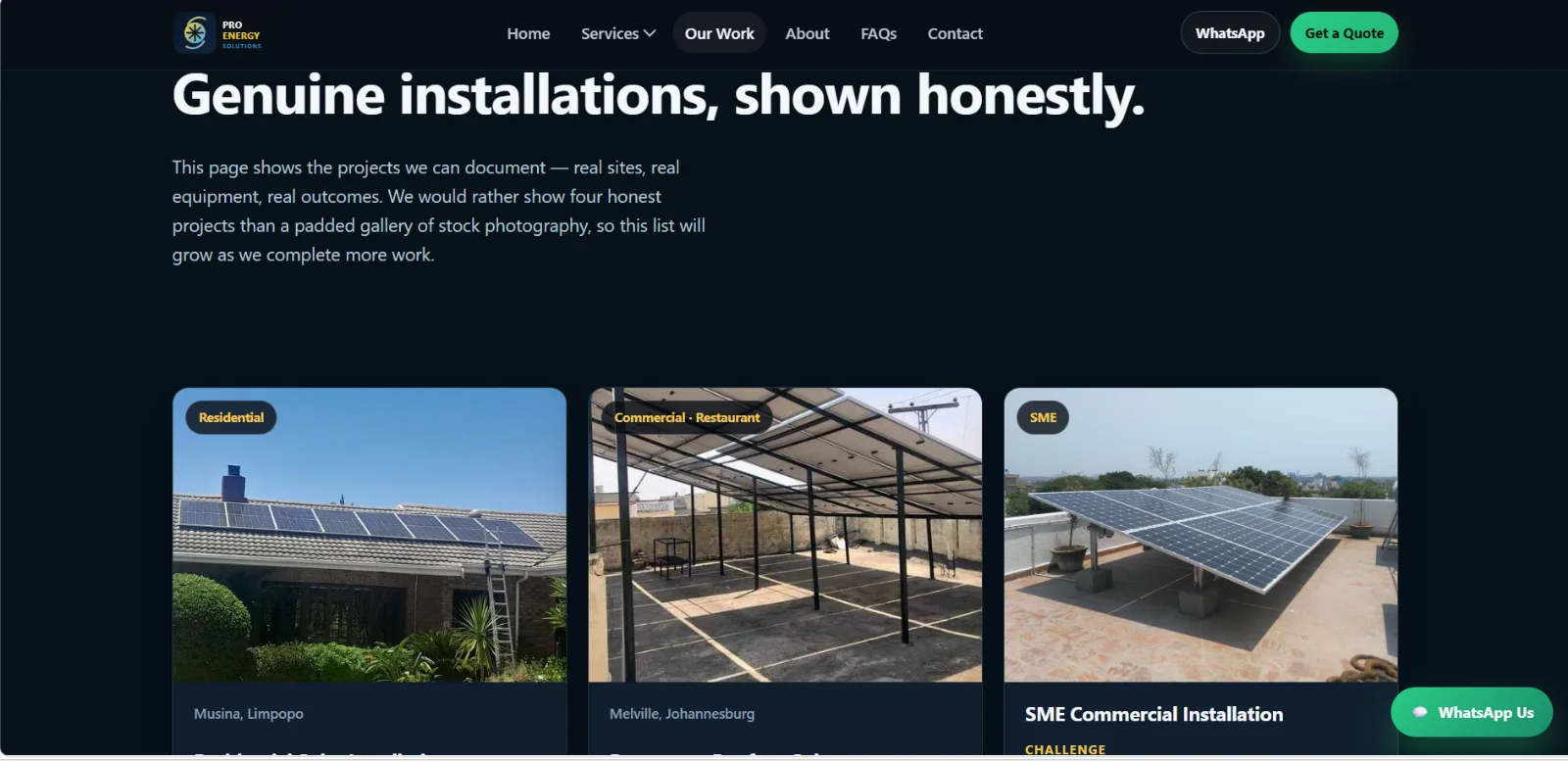
Pro Energy Solutions Our Work page showing genuine residential, commercial and SME solar installations
Home and Our Work. The site leads with a clear service proposition and shows genuine installations across residential, commercial and SME sites rather than stock photography.

The challenge

A solar and electrical services company in Rosettenville, Johannesburg needed a stronger online presence — one that could present its services and completed work credibly to residential and commercial customers, and be found in local search.

The approach

Design and build a fast, responsive corporate website focused on clarity, trust and conversion, on a solid technical-SEO foundation, and treat page weight as an engineering problem to be measured.

The solution

A responsive multi-page website — services, work, about, FAQs and contact — with structured page architecture, a mobile-first layout, prominent WhatsApp and quote calls-to-action, and an optimised image pipeline.

Key capabilities

  • Responsive HTML, CSS and JavaScript, mobile-first
  • Structured multi-page architecture with clear conversion paths
  • Technical SEO foundation — metadata, canonical URLs, structured data, Open Graph, sitemap and robots.txt
  • Local search focus for Rosettenville, Johannesburg and Gauteng
  • Image optimisation and lazy-loading below the fold
  • Accessible markup with visible focus states

The engineering result

The in-use image set was cut by 41.8% — roughly half a megabyte — with no visible loss of quality, alongside lazy-loading and defined image dimensions to hold layout stable. This is a measured website-performance result, not a claim about the client's sales.

HTML CSS JavaScript Technical SEO Performance optimisation

What Auris Nexus did

Brand-led UI/UX design, responsive front-end build, the technical-SEO foundation, and the performance and image-optimisation work.

What it enables

A stronger, more credible brand presence, a faster experience on mobile, and a professional platform for presenting completed solar work to prospective customers.

Want a site that turns attention into enquiries? Tell us what you're trying to present, or read the full write-up.

What's next

Your business problem could be the next system we build.

Some of our work can't be shown publicly. Tell us what you're trying to build or fix, and we'll walk you through comparable projects and exactly how we'd approach yours — starting with a demo of the closest system we've built.